

Hives are welt-like with elevated red spots or bumps on the skin. They are a specific kind of skin-surface edema. They take place when your body reacts allergically to an allergen, a substance that is generally safe. But if hives persist for a long time, they may potentially be a sign of systemic or autoimmune diseases.
Hives may itch, or you may have a burning or stinging sensation. They can range in size from a pinprick to a dinner plate. Urticaria is the term used in medicine for hives. Hives’ welts can occasionally band together to form plaques, which are bigger regions. Even though they may be visible for a few days or more, hives often go away in less than 24 hours.
What Are The Most Common Hives Symptoms?
The most noticeable symptom of hives is the skin welts that form. Welts could be red or the same shade as your skin. They could be large and irregularly shaped, little and spherical, or ring-shaped. Hives are itchy and frequently appear in clusters on the affected part of the body. They can grow, alter their shape, and enlarge.
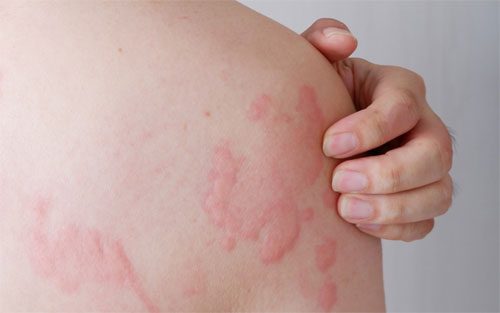
Hives may disappear or return during the outbreak. Individual hives may last anywhere from 30 minutes to a day. Hives may turn white if squeezed. On occasion, the hives may change shape or form collectively, creating a larger, taller space.
Hives symptoms could include any of the following:
- Stinging
- Wheels are swollen patches of skin that have distinct borders and are red or flesh-colored.
- Larger regions of skin that are flat and elevated may develop from wounds as they grow, spread, and come together.
- In a matter of minutes or hours, wounds frequently change shape, vanish, and then A wheal rarely persists for longer than 48 hours.
- Skin writing, also known as dermatographism, is a form of Hives. It results in instant hives in the area that has been rubbed on or scraped and is brought on by pressure on the skin.
What Do Hives Look Like?
Wheels, also known as welts, can be little or large, ring-shaped (or roughly oval), or even assume more haphazard blotchy or worm-like patterns. Additionally, hives might look like insect bites, such as mosquito bites. Hives can look like smooth, raised, flesh-colored lumps or marks, or they might be red and inflamed (or with a red flare or halo).
Spots may become blanched (pale and white) when pressed. Hives can enlarge (or combine to form larger areas), appear in groups or clusters, spread to other parts of the body, or even change shape. In a short amount of time or as a reaction takes its course, flare-ups can itch, burn, or itch (from mild to extreme), swell, vanish, and resurface (creating new scars where earlier ones have disappeared). Flare-ups might occur often throughout the day or over weeks or months.
Hives can appear anywhere on the body, although they seem to appear more frequently on the face, neck, arms, fingers, hands, legs, and feet. Chronic hives can be a little more bothersome and interfere with a person’s regular routines, including daily activities and their ability to get a good night’s sleep. Angioedema, or swelling of the lips, tongue, throat, and eyelids (which may be swelled shut), can be extremely painful, frequently resulting in a burning feeling (this is not typically itchy), and it is not necessarily symmetrical.
What Are The Triggers For Hives

An allergic reaction to something you’ve consumed or come into touch with is often what causes hives. When you have an allergic reaction, your body begins to release histamine into your blood. To defend itself against infection and other external intruders, your body creates histamines. Nevertheless, histamine can cause swelling, itching, and several other hive-like symptoms in some people. Hives can result from allergies to items like pollen, medications, food, pet dander, and insect bites.
Hives can also be brought on by conditions besides allergies. Stress, constrictive clothing, physical exercise, illnesses, and infections frequently cause hives. Hives can also develop as a reaction to overexposure to hot or cold temperatures, as well as irritation from excessive sweating. Because there are so many possible causes, it is frequently unknown what causes hives.
Hives can also be triggered by:
- A few foods (especially peanuts, eggs, nuts, and shellfish)
- Antibiotics, particularly penicillin and sulfa, aspirin, and ibuprofen are examples of medications.
- Venomous or biting insects
- Stress, cold, heat, exercise, or exposure to light are examples of physical stimuli.
- Rubber
- Transfusions of blood
- Bacterial infections, such as strep throat and urinary tract infections
- The common cold, infectious mononucleosis, and hepatitis are examples of viral infections.
- Pet hair
- Pollen
- Different plants
How Can Hives Be Treated
Antihistamine medications are used to treat acute or chronic hives to ease the itching and lessen the intensity of the reaction. Diphenhydramine (Benadryl), Loratadine (Claritin), and Fexofenadine (Allegra) are common antihistamines used to cure hives.
The use of an epinephrine auto-injector may be advised by medical professionals in cases where a person has severe skin reactions coupled with wheezing and shortness of breath. This device is used to treat these severe allergic reactions, commonly known as anaphylaxis. Because severe anaphylactic shock can be fatal, everyone with a skin allergy needs to engage with a skilled allergist who can offer you possibly life-saving treatments.
For patients with persistent hives, a monthly allergy shot called omalizumab (Xolair) may be advised. Two other treatment choices include prednisone and prescription corticosteroids, albeit they should only be used temporarily. The doctor may give immunosuppressants such as cyclosporine (Restasis, Neoral, etc.) if corticosteroids are ineffective at calming the immune system.
Both avoiding and treating the causes of hives are essential. If you or a loved one occasionally develops a rash or itchy red welts, it is in your best interest to obtain an allergy screening and take control of the situation.
When Should You See A Doctor For Hives
Most cases of acute or chronic hives are often mild and non-threatening, and flare-ups go away on their own. Breathing issues might happen when a hive eruption affects the tongue or throat.
Extreme allergic reactions like anaphylaxis, which can potentially cause swelling of the tongue, lips, mouth lining, eyes, throat, and dizziness, can impact the entire body and need to be treated by a medical specialist immediately. If the swelling is not treated right away, it can soon impair the airways and lead to unconsciousness. Anaphylaxis is regarded as a medical emergency since it poses a risk to life.
It is important to see a doctor for a diagnosis and treatment plan if your hives are severe or last for many days.
- Nausea and diarrhea
- Pain
- Wheeze and respiratory stridor (noisy, difficult breathing)
- irregular or fast heartbeat
- Physical illness
- Feeling dizzy or fainting (loss of consciousness)
- Tempest-like skin
- An unexpectedly strong sense of anxiety
- Wheezing
- Chest tightness is a problem sleeping
- Shock and low blood pressure
Epilogue
Hives disappear after around two to three hours. However, more could show up, lengthening the symptoms’ duration. Chronic hives can continue far longer than acute hives, which can form and go away on their own in as little as 6 weeks. It is recommended for people to talk to a doctor about this condition, particularly if the hives remain longer than six weeks, as doctors treat acute and chronic hives differently.