

Acute Hives, also called “Urticaria,” is an eruption of pale red bumps or blisters on the skin that emerge instantly. Angioedema is the name for the swelling that frequently accompanies hives. The common European stinging nettle rash, Urtica dioica, is where the term “urticaria” originates.
A weal (or wheals) is a transient erythema (redness) that lasts from a few minutes to 24 hours. It is a superficial, skin-colored, or pale skin swelling. It may feel scorching and is often extremely irritating. Drugs, allergic responses, chemicals in particular foods, insect stings, sunshine, and other factors may cause urticaria. Unfortunately, it’s frequently tough to pinpoint the precise cause of hives.
What are acute hives?
Acute hives are the type of hive also known as acute urticaria. Urticaria with or without angioedema that has been present for less than six weeks is referred to as acute urticaria. It frequently disappears within hours or days.
Acute hives affect approximately 20% of the population at some point in their lives.
What are the causes of acute hives?
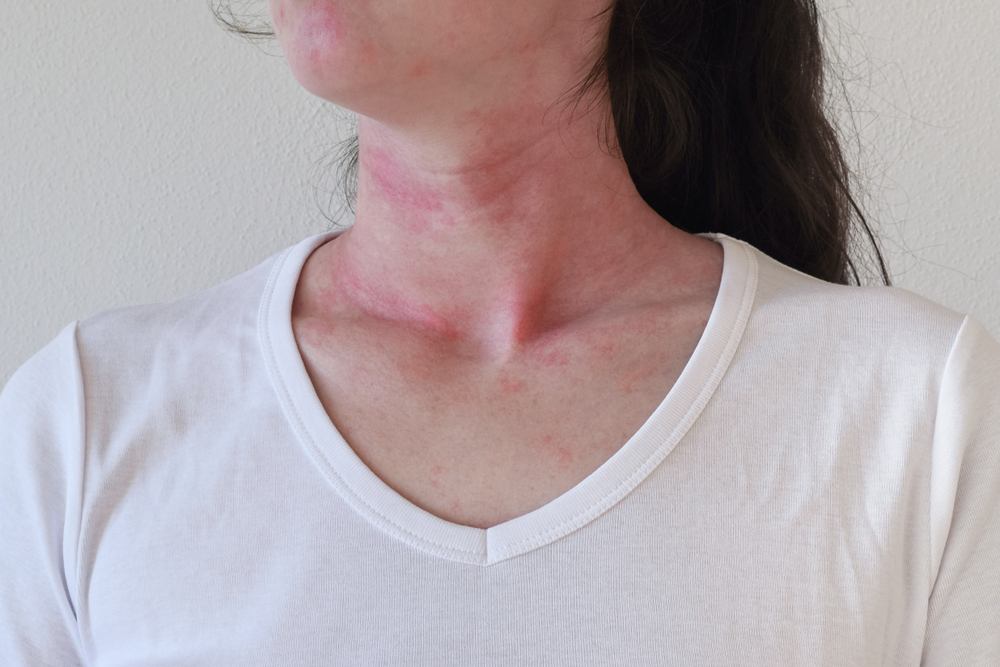
Causes of acute hives
Weals result from the release of chemical mediators by basophils in the blood and tissue mast cells. The cytokines, platelet-activating factor, and histamine are some of these chemical mediators. The mediators expand blood vessels, stimulate sensory nerves, and cause fluid to flow into nearby tissues. For example, the release of bradykinin leads to angioedema.
Immune complex accumulation in afflicted tissues is the cause of serum sickness and reactions that resemble serum sickness. Autoimmune conditions are characterized by the body’s immune system attacking healthy cells, tissues, and organs.
The following factors may cause acute hives:
- Acute viral infections, including viral hepatitis, infectious mononucleosis, and upper respiratory infections.
- Acute bacterial infection, such as sinusitis, mycoplasma, or an abscess in the mouth.
- Shellfish, milk, eggs, peanuts, and other common food allergens.
- Drug-induced urticaria is frequently caused by taking antibiotics.
- Aspirin, ibuprofen, non-selective non-steroidal anti-inflammatory medicines, opiates, and radiocontrast media all produce drug-induced urticaria due to pseudoallergy; these medications cause hives without immune activation.
- Vaccination.
- Stings from bees or wasps.
- Rubber latex causes urticaria after a widespread reaction to local contact.
- Angiotensin-converting enzyme (ACE) inhibitor medications may cause a single episode or recurrent occurrences of angioedema without urticaria.
Approximately 70% of acute hives cases are caused by an allergic reaction.
Who experiences acute urticaria (hives)?
An acute urticaria episode occurs in one out of every five children or adults at some point in their lives. Atopic people are more likely to experience it. Both sexes and all races can be affected by this.
What are the clinical manifestations of acute hives?
Hives or Urticarial wheals can range from a few millimeters to several centimeters, are either white or red, and may or may not have a crimson flare. The duration and shape of each weal might vary from a few minutes to many hours.
Wheals can show the appearance of targetoid lesions, large patches, rings, or a map-like pattern. Acute urticaria tends to be widely dispersed and could affect any body part.
Angioedema tends to be more localized. However, it frequently affects the hands, feet, lips, genitalia, and face, particularly the eyelids and perioral areas. In addition, it could affect the tongue, uvula, soft palate, and larynx.
Other symptoms include the following:
- Itching
- Burning
- Swelling
- Redness
- Warmth (Increased skin temperature)
- Blisters
How are acute hives diagnosed?

Diagnosis of acute hives
- Patients with a recent history of weals lasting less than 24 hours, with or without angioedema, are diagnosed with acute hives. To explore underlying causes, a complete physical examination should be conducted by your doctor.
- If a medication or food allergy is thought to cause acute hives, skin prick tests, radioallergosorbent tests (RAST), or CAP fluoroimmunoassay may be prescribed by doctors.
- Urticaria biopsies might be non-specific and challenging to interpret. With a varied mixed inflammatory infiltration, the pathology reveals edema in the dermis and dilated blood vessels. Damaged vessel walls indicate urticarial vasculitis.
So, a complete medical examination and the above test help diagnose acute urticaria.
Treatment options
A second-generation oral antihistamine from the list below is the principal treatment for acute hives in adults and children. If the recommended dose (in this case, 10 mg of cetirizine) does not work, the dose can be increased four times (e.g., 40 mg of cetirizine daily). Instead of taking them as needed, it is recommended to take them continually. They are discontinued once the acute hives have subsided.
- Cetirizine
- Loratadin
- Fexofenadine
- Desloratadine
- Levocetirizine
- Rupatadine
- Bilastine
Terfenadine and astemizole shouldn’t be used because they are cardiotoxic when used with erythromycin or ketoconazole. They are not offered anymore in some countries. Doctors no longer advise it to treat this condition using traditional first-generation antihistamines like promethazine or chlorpheniramine.
Avoiding trigger elements
In addition to using antihistamines, if the source of urticaria is known, it should be removed (e.g., drug or food allergy). Acute urticaria disappears within 48 hours of avoiding suitable type 1 (IgE-mediated) allergens.
In addition to antihistamines, avoiding urticaria triggers whenever possible is best. For instance:
- Avoid opiates, non-steroidal anti-inflammatory medications, and aspirin (Paracetamol is generally safe).
- If there is clinical relevance for urticaria, avoid recognized allergies verified by positive specific IgE/skin prick testing.
- Use a fan, a cold cloth, an ice pack, or a calming moisturizing lotion to cool the affected region.
Treatment of persistent or chronic acute hives
A four to the five-day treatment of oral prednisone (prednisolone) may be necessary in cases of severe acute urticaria if non-sedating antihistamines are ineffective, especially if angioedema is present. Systemic steroids do not accelerate the recovery of symptoms.