

Hashimoto’s disease is an autoimmune disease characterized by the inflammation of the thyroid gland.
Hashimoto’s disease affects an estimated 5-10 million people in the United States alone.
Facts about complications of Hashimoto’s Disease
This condition causes certain complications. These are as follows:
- It can lead to hypothyroidism or an underactive thyroid because when the thyroid gland is affected, it will gradually affect the production of hormones.
Hashimoto’s disease is the most common cause of hypothyroidism in the United States, accounting for approximately 90% of cases. (Source: American Thyroid Association)
- It increases the risk of developing other autoimmune disorders.
- Rarely, it can also lead to hyperthyroidism or overactive thyroid.
- It is a rare chance, but Thyroid lymphoma, a specific type of thyroid cancer, can also occur due to Hashimoto’s disease.
Hashimoto’s disease is the most common cause of thyroid cancer in the United States, accounting for approximately 70% of cases. (Source: American Thyroid Association)
What are the different names used for Hashimoto’s Disease?
There are different names used for Hashimoto’s disease. These are as follows:
- Hashimoto’s Thyroiditis.
- Chronic lymphocytic thyroiditis.
- Chronic autoimmune thyroiditis.
Anatomy of the Thyroid Gland
The thyroid gland is a butterfly-shaped gland located at the anterior of the neck below Adam’s neck, comprised of C5-T1 vertebrae.
The gland has two lobes regulating the body’s metabolic rate and functions. As well as thyroid hormones control nearly all the major body functions, such as heartbeat, digestion, brain development, and growth.
Causes of Hashimoto’s Disease
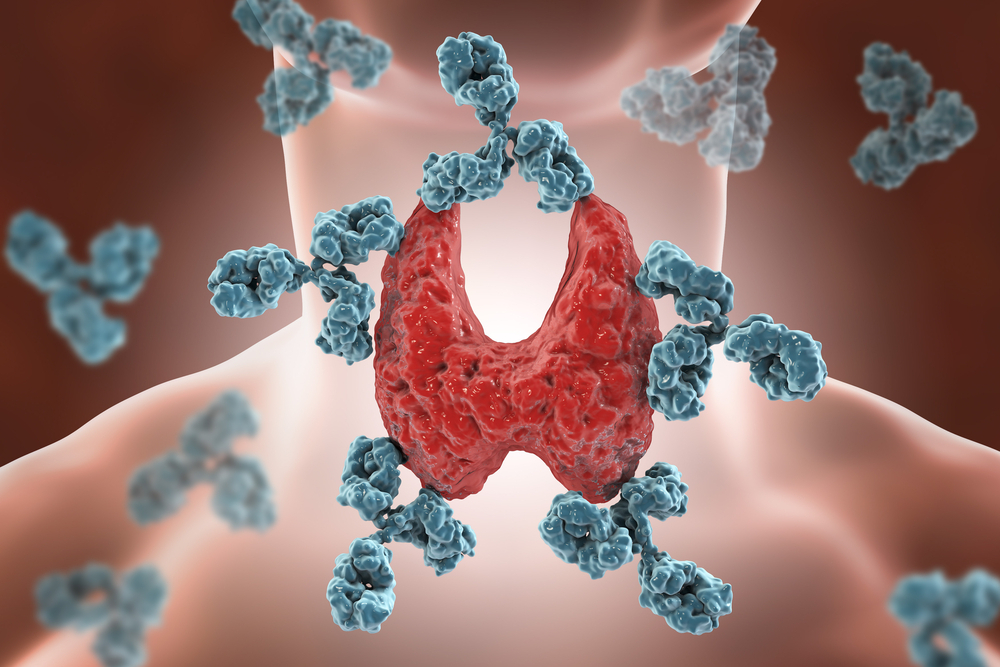
Causes of Hashimoto’s disease
Hashimoto’s is an autoimmune disease which means the condition occurs due to a disturbance in the immune system. The body’s defense mistakenly attacks the normal cells and tissues in autoimmune diseases. This attack can result in the destruction and death of the cell.
In Hashimoto’s disease, the body produces antibodies that attack the thyroid gland and affects its functioning, such as heartbeat.
The reason behind the production of antibodies is still unknown. However, studies indicate that some factors can be the reason for this autoimmune disease. These factors are as follows:
- Family history.
- Genetic factor.
- Viruses such as hepatitis C.
- Environmental triggers such as infection or exposure to radiation therapy.
- Interaction of genetic and environmental factors.
Symptoms of Hashimoto’s Disease
Hashimoto’s disease doesn’t show any signs or symptoms at first. But, with the progression of the disease, the symptoms gradually appear, which indicates a noticeable decline in thyroid hormone leading to hypothyroidism.
Signs and symptoms of Hashimoto’s disease associated with hypothyroidism are as follows:
- Fatigue or irritability
- Sluggishness
- Brain fog (Lapses in memory)
- Weight gain
- Anemia
- Heart palpitations
- Increased sensitivity to cold
- Laziness
- Increased sleep
- Increased levels of cholesterol
- Joint pain (arthralgia) and muscular pain
- Skin dryness
- Alopecia
- Constipation
- Puffy face
- Tongue enlargement
- Increased hair falls leading to thinning of hair.
- Muscle aches (myalgia) and muscle stiffness
- Growth delay in children
- Decreased heart rate
- Depression
- Brittle nails
- Low sex drive
- Problems with memory and concentration
- Swelling of the thyroid is known as Goiter.
Risk Factors and Complications of Hashimoto’s Disease
Risk factors
Several factors can increase the risk of getting Hashimoto’s disease. Some of them are as follows:
- Gender: Hashimoto’s disease is more common in women than men, with a ratio of 7:1.
- Age: The condition can occur at any age. However, it is more common in young age and women of age 30 to 50.
- Hereditary: You are more likely to get affected if you have a family history of Hashimoto’s disease.
- Pregnancy: During gestation, hormonal changes occur involving the immune system. Changes in the immune system can increase the risk of getting Hashimoto’s disease after pregnancy.
- Radiation exposure: Excess exposure to environmental or other radiations can also increase the disease risk.
- Excessive iodine intake: Increased intake of iodine in the diet of people who are already at risk of getting Hashimoto’s disease increases the likelihood of illness.
- Autoimmune Diseases: A person is more vulnerable to developing a disease if he has a medical history of other autoimmune disorders. Such as the following:
- Lupus
- Rheumatoid arthritis
- Celiac disease
- Type 1 Diabetes
- Sjogren’s syndrome
Complications of Hashimoto’s disease
Hashimoto’s disease occurs when the thyroid gland is affected. The thyroid gland is responsible for several major functions of the body, such as heart rate, breathing, and digestion. The affected thyroid gland also affects all these functions.
When Hashimoto’s disease or hypothyroidism (underactive thyroid) is left untreated, it can cause several complications. Some of them are as follows:
- High cholesterol levels
- Goiter
- Heart problems such as heart failure
- High blood pressure
- Hives
- Mental health issues such as depression
- Pregnancy complications
- Hashimoto’s Encephalopathy
- Myxedema
- Sexual and reproductive dysfunction, such as infertility
- Congenital disabilities