

Gastroenteritis, known as “Stomach Flu,” is a viral intestinal infection. It is an inflammation of the stomach and intestines caused by a virus, bacteria, or parasites.
It can be caused by eating or sharing food with the infected person. Its symptoms are often misunderstood as seasonal influenza, while it is an infection that affects the GIT system, including the stomach, intestines, and colon.
Gastroenteritis is the second leading cause of death in children under the age of 5 worldwide, accounting for 1.8 million deaths in 2013. (WHO, 2018)
Who develops gastroenteritis or stomach flu?
Anybody can contract stomach flu. However, you are more likely to get it if you are in an environment where many individuals share living or dining areas, such as:
- Kids in childcare or summer camp.
- Nursing institutions.
- Dormitory housing for students.
- Armed forces people.
- Prisons.
- Mental health wards.
- Passengers on cruise ships.
- Travelers to developing nations.
- Anyone whose immune system is weak.
What are the causes of gastroenteritis?
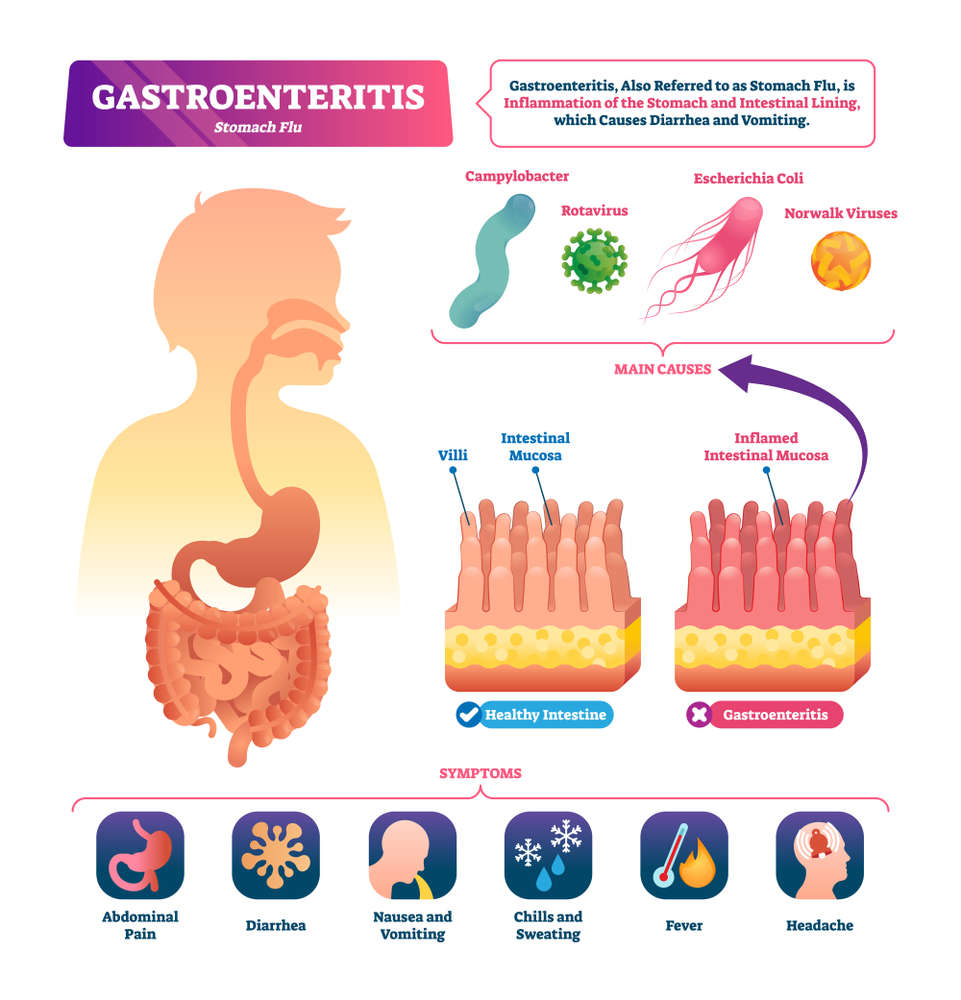
Gastroenteritis
Consuming contaminated food or water is the main risk factor for contracting viral gastroenteritis. If you share towels, food, or utensils with someone with one of the viruses that cause gastroenteritis, you may also be more prone to contract the condition.
Numerous viruses can cause gastroenteritis, such as:
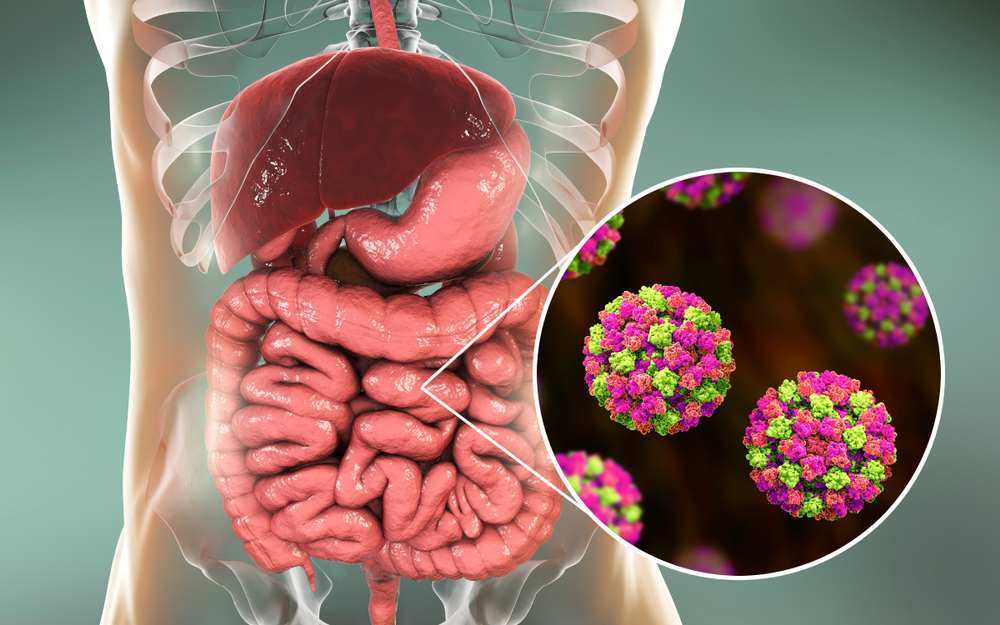
Norovirus
- Noroviruses: Noroviruses are the most common cause of foodborne illness worldwide, affecting children and adults. People confined in small areas are particularly vulnerable to contracting it. You typically contract the virus from contaminated food or drink. However, it can also spread among those sharing food or near one another.
Additionally, you could contract the disease if you touch your mouth after touching a norovirus-contaminated surface.
Norovirus is the leading cause of gastroenteritis in adults, accounting for 58% of all cases. (CDC, 2017)
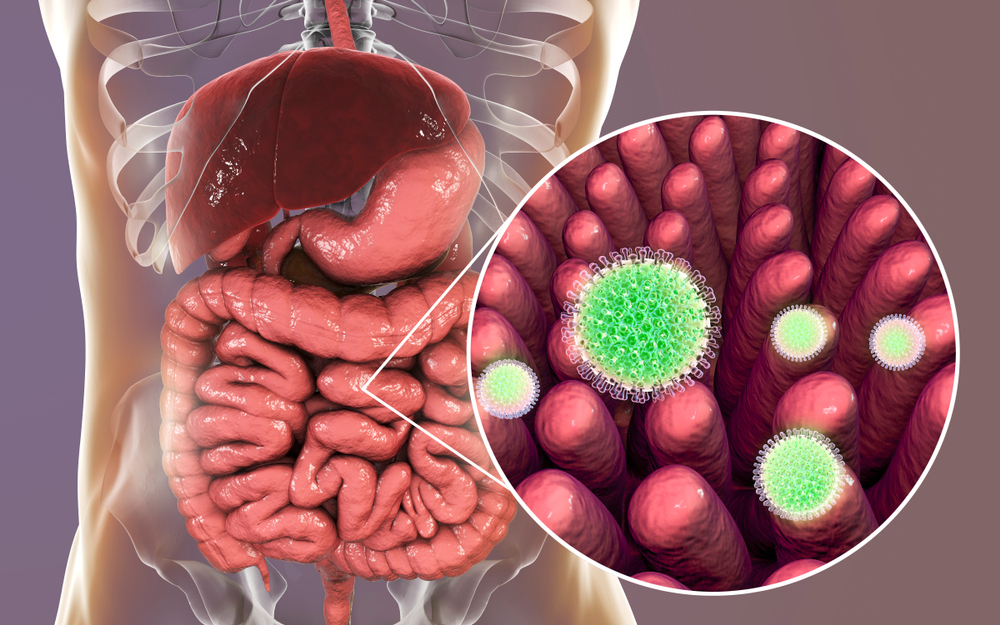
Rotavirus
- Rotavirus: Most cases of viral gastroenteritis in children are caused by this virus, which they typically contract by putting their fingers or other things exposed to it into their mouths.
Additionally, contaminated food might transmit the disease. Infants and small children are most severely affected by the virus. Even if adults with rotavirus infection don’t show symptoms, they can still pass the disease to others. This is especially concerning in institutional settings like nursing homes since infected persons may unintentionally infect others.
Rotavirus is the most common cause of severe gastroenteritis in children, accounting for 40% of all cases. (CDC, 2017)
What are the symptoms of gastroenteritis?
Although gastroenteritis is frequently referred to as “the stomach flu,” it is not the same as influenza. Only your respiratory system, including your nose, throat, and lungs, is impacted by the flu (influenza). On the other hand, gastroenteritis affects your intestines and results in symptoms including:
- Bloody diarrhea typically indicates the presence of a distinct, more severe ailment and is usually watery.
- Vomiting, nausea, or both.
- Stomach aches and cramps.
- Occasional headaches or muscular aches.
- Low-grade fever.
Viral gastroenteritis symptoms can range from mild to severe and manifest between 1-3 days of infection, depending on the cause.
The typical duration of symptoms is a day or two, although, on rare occasions, they might persist for up to 14 days.
Because the symptoms are similar, it is simple to mistake viral diarrhea for diarrhea caused by bacteria or parasites like giardia or parasitic worms like Salmonella, Clostridioides difficile, and Escherichia coli.
When to consult a doctor?
If you’re an adult, get in touch with your doctor if:
- You are unable to swallow beverages for a full day.
- You’ve had diarrhea or vomiting that’s lasted longer than two days.
- You’re passing blood in your vomit.
- You’re dehydrated, manifesting as extreme thirst, dry mouth, dark yellow urine, little or no urine, and extreme weakness.
- You observe blood in your bowel motions.
- You get an intense stomach ache.
- Your fever is more significant than 104 F. (40 C)
Seek immediate medical attention for your child if they:
- Has a temperature of at least 102 F. (38.9 C)
- Seems irritable or exhausted.
- Experiencing severe pain or discomfort.
- Possesses bloody diarrhea.
- Seems dehydrated.
If you have a newborn, remember that spitting up can be something your child frequently does; vomiting is not. In addition, there are numerous different reasons why babies vomit, and many of them can need medical treatment.
How is gastroenteritis diagnosed?

Diagnosis of Gastroenteritis
From your symptoms, healthcare professionals can frequently diagnose stomach flu. However, your doctor might order several tests to rule out other illnesses:
- Stool specimens: Tests check your feces for bacteria, viruses, or parasites.
- Sigmoidoscopy: To check for inflammatory bowel disease symptoms, a doctor inserts a thin, flexible tube with a tiny camera from the anus into the lower large intestine. The sigmoidoscopy takes 15 minutes and is typically performed without sedation.
How do you get rid of gastroenteritis or the stomach flu?
The two most important things you can do to recover more quickly are to get plenty of rest and drink plenty of water.
- Your body loses water and electrolytes due to vomiting and diarrhea.
- Take tiny, frequent sips of water, sports drinks, juice, or broth if your stomach discomfort persists, or chew on ice chips.
- In severe episodes of diarrhea, water alone may not be sufficient to keep you hydrated, so be careful to consume electrolyte-balanced fluids (sports drinks, Gatorade, Pedialyte, etc.).
Who is more at risk of having stomach flu?
People of all ages in the world can have gastroenteritis. However, the following people may be more vulnerable to gastroenteritis:
- Little ones: Due to the time it takes for a child’s immune system to develop, children attending daycare facilities or elementary schools may be particularly at risk.
- Older people: Adult immune systems typically become less effective later. As a result, the immune systems of elderly residents in nursing homes deteriorate, making them more susceptible. Additionally, they share close quarters with people who might spread the disease.
- Either students or those living in dorms: An environment for transmitting an intestinal infection can exist everywhere, and individuals congregate in close quarters.
- Any person with a compromised immune system. You may be particularly vulnerable if you have a low resistance to infection, such as if your immune system is weakened due to hives, HIV/AIDS, chemotherapy, or another medical condition.
- There is a season when a specific digestive virus is most prevalent. For example, rotavirus and norovirus infections are more prevalent in the winter and spring if you live in the Northern Hemisphere.
What may be the complications of gastroenteritis?
Dehydration, or a severe loss of water, vital salts, and minerals, is the most frequent complication of viral gastroenteritis.
However, dehydration shouldn’t be an issue if you’re in good health and consume enough liquids to compensate for the fluids you lose from vomiting and diarrhea.
Infants, older adults, and persons with compromised immune systems are at a higher risk of developing severe dehydration. It may be necessary to stay in the hospital to restore lost fluids via an IV in their arms. However, death from dehydration is infrequent.
How can stomach flu be prevented?
The following precautions are the best method to stop the spread of intestinal infections:
- Get your kid immunized
- Wash your hands
- Keep your items separate all over your house
- Cook your meal safely
- Stay away from touching any laundry that may have come into contact with a virus.
- Examine the childcare institution
- Don’t get too close
- Clean up the hard surfaces
Get your kid immunized
In some nations, a vaccine is available to protect against rotavirus-related gastroenteritis. The vaccination appears beneficial in preventing severe symptoms of this illness when administered to infants in the first year of life.
Wash your hands
- Teach your older children to wash their hands, especially after restroom use, after changing a baby’s diaper, and before cooking or eating food.
- Use warm water and soap, and rub your hands thoroughly for at least 20 seconds to prevent germs from spreading.
Keep your items separate all over your house
Don’t share drinking cups, plates, or eating utensils. Likewise, towels for the bathroom should be separate.
Cook your meal safely
- Before eating, wash your fruits and veggies.
- Before preparing food on kitchen surfaces, clean those surfaces.
- If you are sick, stay away from the kitchen.
Stay away from touching any laundry that may have come into contact with a virus
- Wear gloves while handling laundry if someone has viral gastroenteritis in your home.
- Dry your bedding and clothing in the warmest setting after washing them in hot water. After handling laundry, thoroughly wash your hands.
Examine the childcare institution
Ensure the institution has separate areas for cooking or serving food and changing diapers. A basin and a hygienic diaper disposal system should be in the room with the diaper-changing table.
Don’t get too close
If possible, keep your distance from somebody who has the infection.
Clean up the hard surfaces
Disinfect hard surfaces, such as counters, faucets, and doorknobs.
What is the duration of stomach flu?
Generally, the stomach flu lasts a little more than a week. If you get symptoms, stay at home and wash your hands properly. Be careful with your bathroom habits because the virus can remain in your stool for up to two weeks after experiencing symptoms. After using the restroom, always wash your hands and stained clothing in hot, soapy water.
What causes stomach flu to strike at night?
- Due to their circadian cycle, some people’s stomach flu symptoms could be more severe at night.
- Infection-fighting chemicals are released at night due to increased immune system activity. As you resist the flu, these can irritate your body and make you feel worse.