
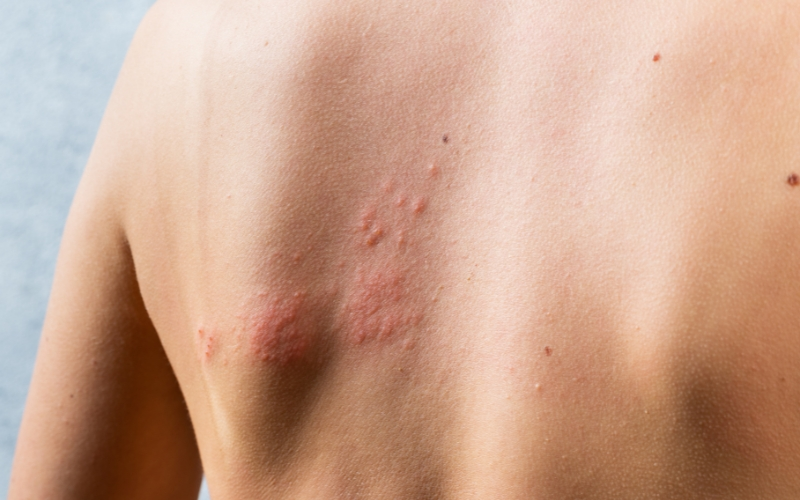
Hives on skin and body occur due to some allergic reaction to food and something you have touched. It is in the form of a rash on human skin, which creates severe itchiness.
It might be in red or purple color and give a burning sensation to the affected individual. Its treatment includes antihistamines or steroids.
What are hives?
Hives are welt-like, with elevated red spots or bumps on the skin. They are a sort of swelling that appears on the skin’s surface and are brought on by an allergic reaction. When your immune system comes into contact with an allergen, allergic reactions occur.
Proteins known as allergens are generally safe for most people but can trigger allergic reactions in those who are more susceptible.
Hives frequently cause intense itching, but you may also experience burning or stinging. They can range in size from a fingertip to a dinner plate. Urticaria is the official term for hives.’
How do Hives look like?
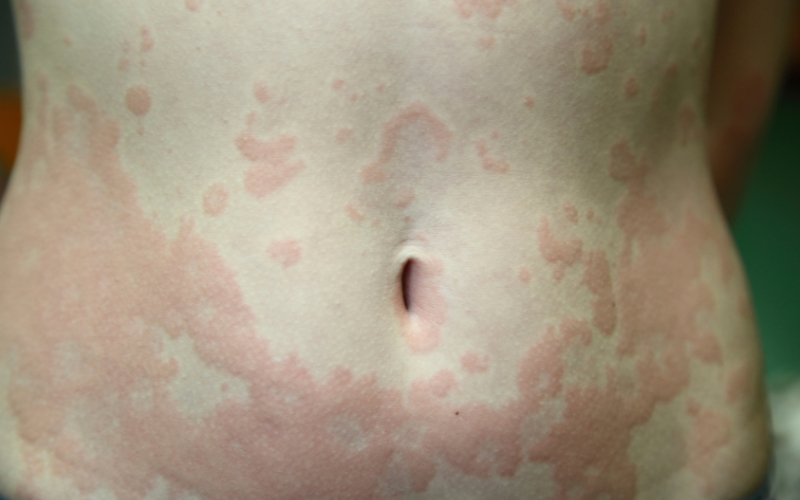
Hives mostly look like a raised welt or red bumps on the skin. They can be large and small in size. They may be red, purple, or the same as your skin color.
Where do hives typically appear on the body?
Any area of the body might develop hives, although the torso, throat, arms, and legs are the most frequently affected. The itchy welts typically appear in groups, and while one group gets better, another one grows worse.
Ware the types of Hives?
There are basically two forms of hives.
- Acute Hives
- Chronic hives
Hives that don’t stay very long are referred to as acute urticaria (It stays less than six weeks). Hives that occur at least twice a week for longer than six weeks are referred to as chronic urticaria.
Hives that are persistent and have no apparent cause are known as chronic, spontaneous urticaria. Chronic idiopathic urticaria is a more traditional name for this illness.
Physical urticaria, often known as inducible urticaria, is another condition. When you are exposed to the cold, heat, or sun, these hives may appear. Vibrations or pressure might cause some persons to respond by moving or perspiring. After exposure, physical hives typically develop within an hour.
How do hives affect the skin?
An allergic reaction to something you put on your skin frequently causes acute hives. Mast cells, which are immune cells, are found in the skin. These cells emit substances during their active state, including histamine. Hives develop as a result of histamine. Your skin goes under stress or physical pressure because of these hives.
In acute hives, welts or bumps are raised on your skin. These bumps may appear reddish on lighter-colored skin. They make the skin itchy and also cause swelling under your skin.
How do hives affect the body?
Hives can turn up on any part of the body and can be propagated across considerable areas. The inflammation is substantially really itchy and ranges in size from some millimeters to the size of a hand.
Although the impacted region may change in aspect within a day. the rash usually settles within some days. Hives are itchy, and they have a tendency to come out in batches on the affected part of the body. They can cultivate larger, change shape, and spread.
Hives may vanish or reappear over the course of the outbreak. Individual hives can last anywhere from half an hour to a day. Hives may turn white when pressed. occasionally the hives may alter shape or form together and produce a substantial, raised area.
Hives can happen in a variety of places on the body and can cause the appearance of a painful lump on your lips, eyes, and inside your throat.
How do hives affect the immune system?
When the body reacts to allergens, it releases histamine and other chemicals that create inflammation and fluid to build up under the skin.
According to the American Osteopathic College of Dermatology, about half of the cases of habitual idiopathic hives stem from a person’s own immune system, which has become hyperactive and begins attacking normal tissues, causing hives. In these cases, patients produce an autoantibody that activates the mast cells on the face of their skin.
Mast cells are cells in the skin and mucous membranes that contain histamine. discharge of histamine can cause a person to suffer antipathetic symptoms, similar to hives or swelling. When this reaction is caused by a patient’s own vulnerable system and not an allergen, it’s known as autoimmune hives.
Numerous people with autoimmune hives perceive that their hives are more likely to occur when they’re worried. Some women feel like hormonal changes they witness around their around menopause and during their menstrual cycle may spark their hives.
Hives are also associated with having an underpinning autoimmune illness. Hives have been linked to thyroid ailment, rheumatoid arthritis, systemic lupus erythematosus, celiac complaint, Raynaud’s syndrome, vitiligo, and type 1 diabetes. still, hives have most generally been associated with having an autoimmune thyroid ailment similar to Hashimoto’s complaint, which is a form of hypothyroidism or underactive thyroid.
Summary
Hives can occur due to some allergic reaction to food and by touching something. It is the type of rashes on human skin which generates terrible itchiness.
It may cause lumps which are a sort of swelling that appears on the skin’s surface and are carried on by an allergic reaction. When your immune system meets an allergen, it could result in allergic reactions. Proteins known as allergens are generally safe for most people but can trigger allergic reactions in those who are more susceptible.