

Itchy, raised welts on the skin are called hives, also called urticaria. They occasionally sting or hurt and are typically red, pink, or flesh-colored and are itchy.
Raised areas of skin that are usually a sign of an allergic reaction can occur anywhere on the body, including the face, lips, throat, hands, feet, and genitals. Hives can be large or small and they may appear in a single spot or in clusters. They can be red, pink, or flesh-colored and are often itchy.
Hives are typically brought on by an allergic reaction to a substance, such as a drug or food, or an environmental irritation.
It is frequently an immediate (temporary) issue that can be treated with allergy medicines. Most rashes disappear without treatment. Hives that are followed by a severe allergic reaction and chronic (ongoing) occurrences, nevertheless, are more serious medical issues.
Hives are more likely to occur in those who are known to have allergies. If you are on medicine or unintentionally come into contact with substances to which you may be allergic, such as food or pollen, you may also be at risk of developing hives. You may be more prone to getting hives if you already have an illness or a medical condition.
What Are The Symptoms of Hives?
The welts that develop on the skin are the hives’ most obvious sign. Welts might be the same color as your skin or they can be read. They might be big and haphazardly formed, small and circular, or ring-shaped. Hives are scratchy and frequently come in groups on the area of the body that is afflicted. They are able to expand, change shape, and get bigger.
Over the course of the outbreak, hives could leave or come back. Individual hives might persist for anything between 30 minutes and a day. If squeezed, hives may turn white. A larger, higher space may occasionally be created when the hives change shape or form collectively.
Hives symptoms could include any of the following:
- Stinging
- Wheals are swollen patches of skin that have distinct borders and are red or flesh-colored.
- Larger regions of skin that are flat and elevated may develop from wounds as they grow, spread, and come together.
- In a matter of minutes or hours, wounds frequently change shape, vanish, and then A wheal rarely persists for longer than 48 hours.
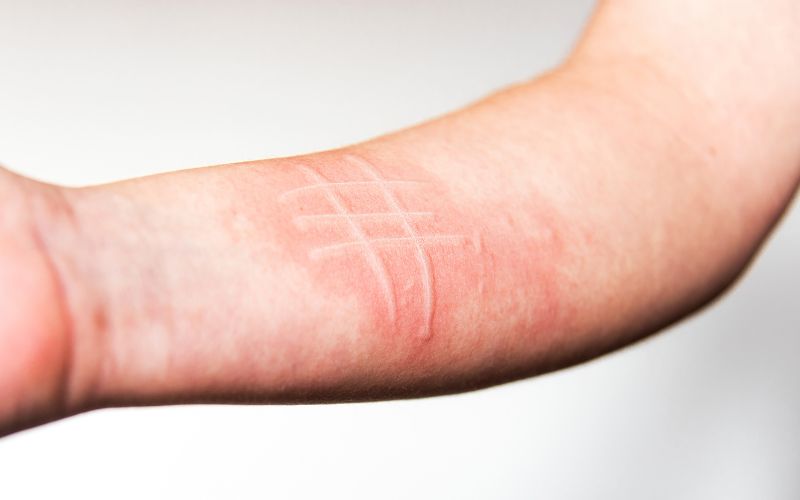
- Skin writing, also known as dermatographism, is a form of Hives. It results in instant hives in the area that has been rubbed on or scraped and is brought on by pressure on the skin.
How Are Hives Diagnosed?
A proper diagnosis is necessary to cure Hives. Your dermatologist will first go through your medical history before running tests to determine the cause of your hives. These examinations could involve a skin prick test and blood tests for allergies. Investigation and diagnostic testing are typically used in conjunction to pinpoint the origin of hives.
A blood test is performed to determine whether your blood contains particular antibodies, while skin tests involve the doctor applying various allergens to your skin and watching for an allergic reaction.
After that, a physician will perform a physical examination and assess the skin lesions (those that are present). A skin prick test may be used to identify the allergen if allergies are thought to be the cause of the reaction.
It’s possible that a trigger is quite easy to identify, such as a reaction that happens quickly after eating shellfish or peanuts, being in the sun or near water, getting a scrape on the skin, or working out vigorously.
A doctor will advise against coming into touch with or consuming a specific food, as well as any other goods derived from or containing the chemicals after a trigger allergy has been identified. A suspected allergen will be given to the affected person to consume (in a measured amount) in order to cause a hive reaction in the event that an oral food test is requested and deemed safe to perform.
Medication testing can be done using the same type of oral test (a cautious drug challenge). These tests may not be conducted if there is excessive risk of serious reactions, such as anaphylaxis, but those that are will be closely monitored throughout, frequently with emergency supplies or medication on hand.
What Causes Hives?
Hives are typically brought on by an allergic reaction to something you have eaten or come into contact with. Your body starts to release histamine into your blood when you experience an allergic reaction. Your body produces histamines in an effort to protect itself from infection and other external invaders.

However, histamine can in some people lead to swelling, itching, and many of the symptoms associated with hives. Regarding allergies, hives may be brought on by things like pollen, drugs, food, pet dander, and insect bites.
In addition to allergies, other conditions can also result in hives. Hives are a frequent reaction to stress, tight clothing, physical activity, diseases, and infections. Additionally, excessive exposure to hot or cold temperatures, as well as irritation brought on by excessive sweating, can cause hives to appear. The true origin of hives is frequently unknown because there are so many potential causes.
How To Cure Hives Fast?
Most cases of hives are not serious. However, you should always seek emergency medical attention if you have hives along with wheezing, shortness of breath, tongue swelling, nausea, vomiting, diarrhea, or lightheadedness. These could be symptoms of a potentially fatal allergic reaction.
If hives are the sole problem, use these simple tips to get rid of them as soon as possible:
- In order to reduce the warmth and swelling of hives, a cooling cloth or cold pack may be the perfect solution. Use as required.
- For a very long time, oatmeal has been valued as a calming and anti-inflammatory food. Many body cleansers, bath soaks, and moisturizers on the market contain colloidal oatmeal, which is made from oats that have been pulverized, boiled, and milled into a fine powder. Alternatively, you may simply add the colloidal oatmeal powder to your bathtub for a soothing soak.
- Be gentle with your skin if you have hives because it is already inflamed. Since scratching and itching can aggravate hives, stay away from strong soaps and other skin irritants. Alcohol use can exacerbate hives.
- The aloe vera plant’s gel-like product, which is present in many skincare products, is frequently used as a treatment for burns and other skin ailments.
- When you were a child, your grandmother used calamine, a bubblegum-pink liquid, on your bug bites. It can also give hives sufferers momentary itch relief. Zinc oxide in calamine relieves itching. A comparable medication called Caladryl mixes calamine with the topical anesthetic pramoxine. But if you have hives all over your body, these creams are nasty.
How to Treat Hives?

Antihistamine medications are used to treat acute or chronic hives in order to ease the itching and lessen the intensity of the reaction. Diphenhydramine (Benadryl), Loratadine (Claritin), and Fexofenadine (Allegra) are common antihistamines used to cure hives.
Doctors may recommend an epinephrine auto-injector for individuals who experience severe skin responses accompanied by shortness of breath and wheezing. These extreme allergic reactions, also known as anaphylaxis, are treated with the use of this device. It is crucial for everyone with a skin allergy to work with a knowledgeable allergist who can provide you with potentially life-saving therapies because severe anaphylactic shock can be fatal.
A monthly allergy shot called omalizumab (Xolair) may be recommended for patients with chronic hives. Prednisone and prescription corticosteroids are two more therapy options, although they are only meant to be used temporarily. Immunosuppressants like cyclosporine (Restasis, Neoral, etc.) may be prescribed by the doctor if corticosteroids are inadequate at calming the immune system.
It is just as vital to avoid the causes of hives as it is to treat them. It is to your greatest advantage to have an allergy screening and take charge of the matter if you or a loved one occasionally gets a rash or itchy red welts.