
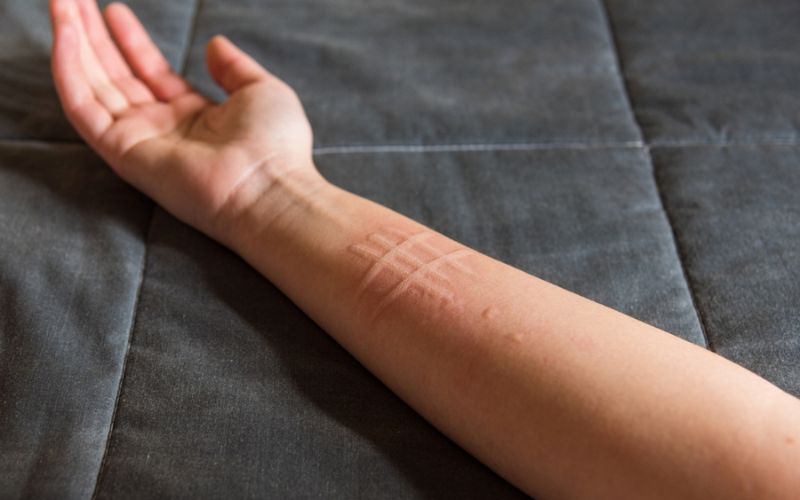
Dermatographic urticaria, also known as “skin writing” or “dermographism,” is a unique and intriguing skin condition under the umbrella of urticaria or hives.
This condition is characterized by the ability of the skin to develop raised, red, and itchy welts when subjected to even minor pressure or friction. These welts resemble the writing lines on the skin, hence the name “skin writing.”
While dermatographic urticaria is not life-threatening, discomfort, embarrassment, and aesthetic concerns can significantly impact an individual’s quality of life. This article aims to delve into the various aspects of dermatographic urticaria, including its causes, symptoms, diagnosis, treatment, and ways to manage the condition.
Understanding Dermatographic Urticaria

Dermatographic Urticaria Causes and Mechanisms
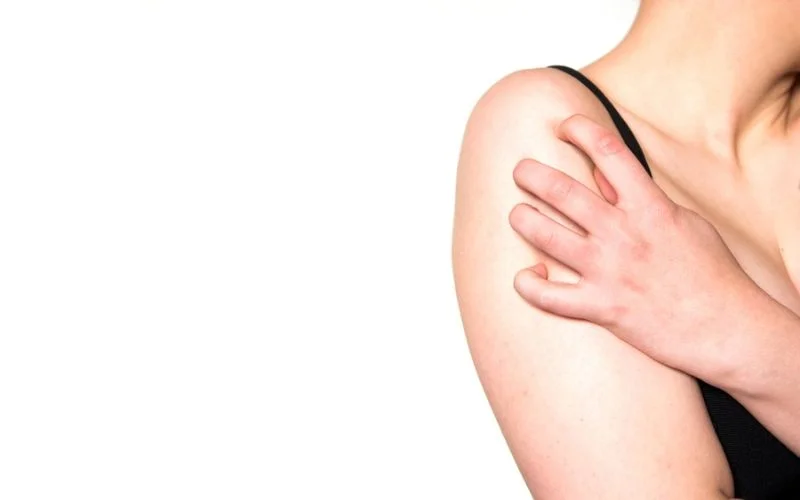
Dermatographic urticaria occurs when the mast cells in the skin release histamine and other inflammatory chemicals in response to mechanical stimulation or pressure. Mast cells are immune cells crucial to the body’s allergic reaction.
In this condition, the immune system responds excessively to what would normally be harmless stimuli, leading to characteristic hives and itching. The exact cause of dermatographic urticaria is not fully understood, but it is believed to have a genetic component, as it tends to run in families.
Symptoms of Dermatographic Urticaria
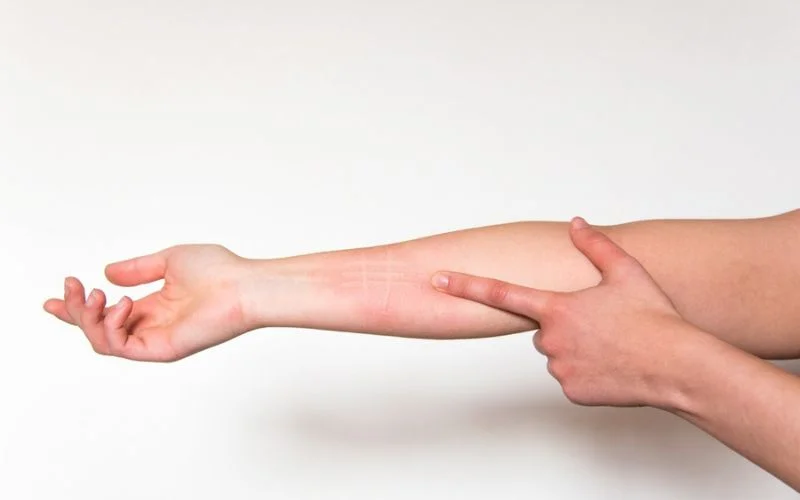
The hallmark symptom of dermatographic urticaria is the rapid appearance of raised, red welts on the skin in response to mechanical pressure.
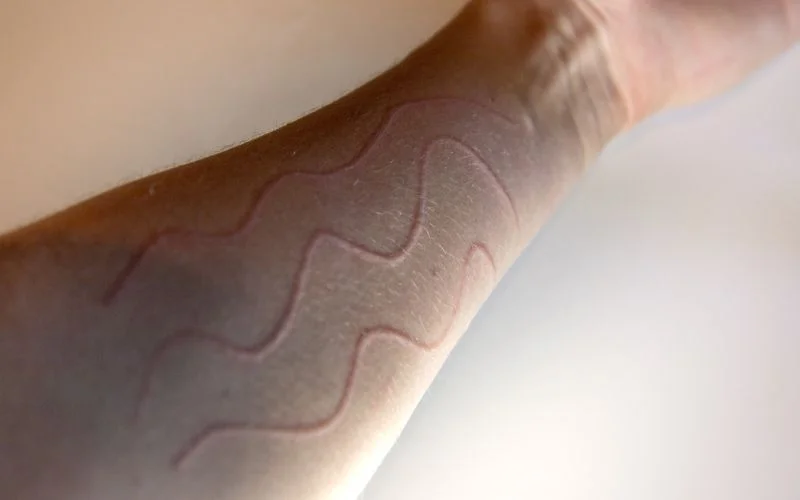
These welts typically last 30 minutes to an hour and then fade away. The lines created on the skin due to stress may be linear, zigzag, or even resemble a simple design, leading to the condition’s colloquial name, “skin writing.” Itching and discomfort often accompany the appearance of these welts.
Diagnosis and Differentiation
Distinguishing Dermatographic Urticaria from Other Conditions
While the visual and tactile characteristics of dermatographic urticaria are distinctive, it’s essential to differentiate this condition from others that might present similar symptoms.
Diseases like pressure urticaria and delayed pressure urticaria share some similarities but have different underlying mechanisms and treatment approaches. Consulting a dermatologist is crucial for an accurate diagnosis.
Diagnosis Process
Diagnosing dermatographic urticaria involves a thorough medical history review and a physical examination. The dermatologist might perform a skin test known as a “scratch test” to provoke a response and observe the development of hives.
In this test, a blunt object gently scratches the skin’s surface, and the reaction is monitored. In some cases, additional tests might be conducted to rule out other potential skin conditions or underlying issues.
Treatment and Management
Lifestyle Modifications
For individuals with mild cases of dermatographic urticaria, certain lifestyle changes can help manage the condition. Avoiding tight-fitting clothes, rough fabrics, and excessive scratching can minimize the triggering of hives. Maintaining proper skin hydration through regular moisturization can also reduce the risk of flare-ups.
Medications
In cases where lifestyle modifications aren’t sufficient, medical intervention might be necessary. Antihistamines, both over-the-counter and prescription, are commonly used to manage symptoms. These medications work by reducing the histamine response and alleviating itching and welts.
Corticosteroids might be prescribed for severe cases, but these are generally considered a short-term solution due to potential side effects.
Immunomodulators
In recent years, immunomodulatory drugs have shown promise in managing chronic urticaria, including dermatographic urticaria.
Omalizumab, for instance, is an injectable medication that targets immunoglobulin E (IgE), a key player in allergic responses. This treatment option is generally reserved for cases that do not respond to traditional antihistamines.
Coping Strategies
Dermatographic Urticaria and Mental Health
Living with dermatographic urticaria can impact an individual’s mental and emotional well-being. The visible nature of the condition can lead to self-consciousness and even social isolation.
It’s crucial to address these emotional aspects alongside physical symptoms. Seeking support from friends, family, or mental health professionals can help individuals navigate the challenges of managing a chronic skin condition.
Conclusion
Dermatographic urticaria is a captivating skin condition that exemplifies the intricate interplay between the immune system and the skin’s response to external stimuli.
While not life-threatening, the discomfort, itching, and aesthetic concerns associated with this condition can significantly affect an individual’s daily life. Early diagnosis, proper treatment, and lifestyle adjustments can go a long way in managing the symptoms and enhancing the overall quality of life for those affected.
Moreover, raising awareness about dermatographic urticaria can foster understanding and empathy, contributing to a more inclusive and supportive society for individuals with diverse skin conditions.