
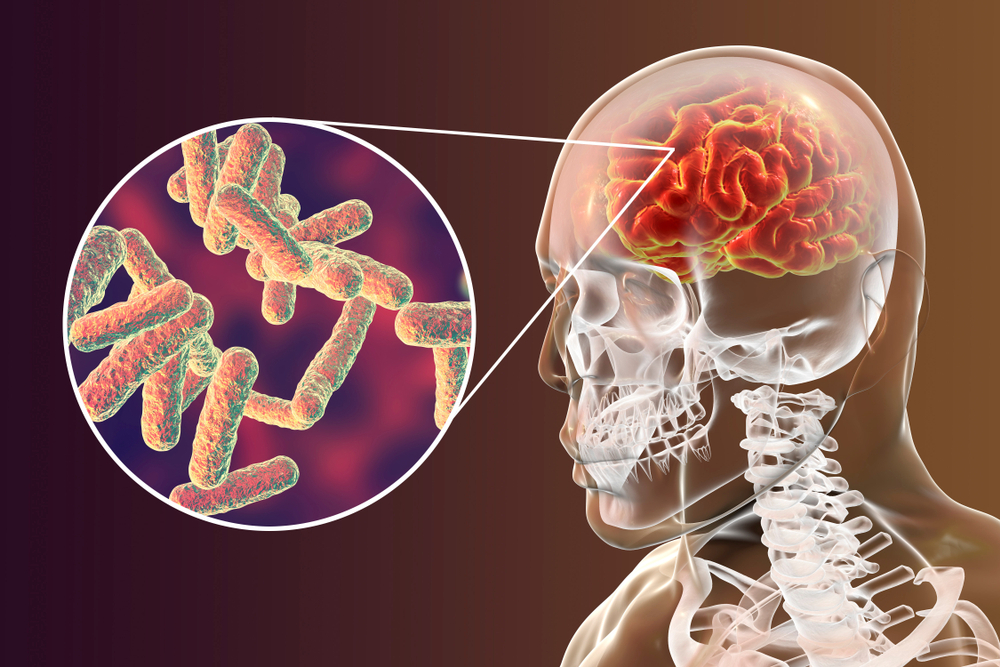
Meningitis is the rare but life-threatening infection and inflammation of the protective membranes of the brain and spinal cord known as “meninges.” Different pathogens, such as bacteria, viruses, parasites, and fungi, can cause it. However, the most common is bacterial meningitis.
Globally, meningitis affects more than 1.2 million people yearly, resulting in more than 120,000 deaths.
Top 6 Facts about Meningitis
- The bacteria responsible for causing bacterial meningitis, such as meningococcal or pneumococcal, live in the nose and throat of a person.
- GBS (Group B Streptococcus) is another type of bacteria that causes bacterial meningitis in newborns. It lives in the vagina and intestines.
- It can affect anyone; however, it is most common among babies, toddlers, teenagers, and young adults.
- Meningitis is contagious and can be spread through contact with saliva, nose and throat secretions, and respiratory droplets.
- If the condition is left untreated, it can be very serious and dangerous.
- It can cause blood poisoning known as sepsis which can be life-threatening and cause permanent damage to the brain, nerves, and spinal cord.
In the United States, there are approximately 4,100 cases of bacterial meningitis each year, resulting in 500 deaths.
What are the potential causes of meningitis?
Causes of meningitis
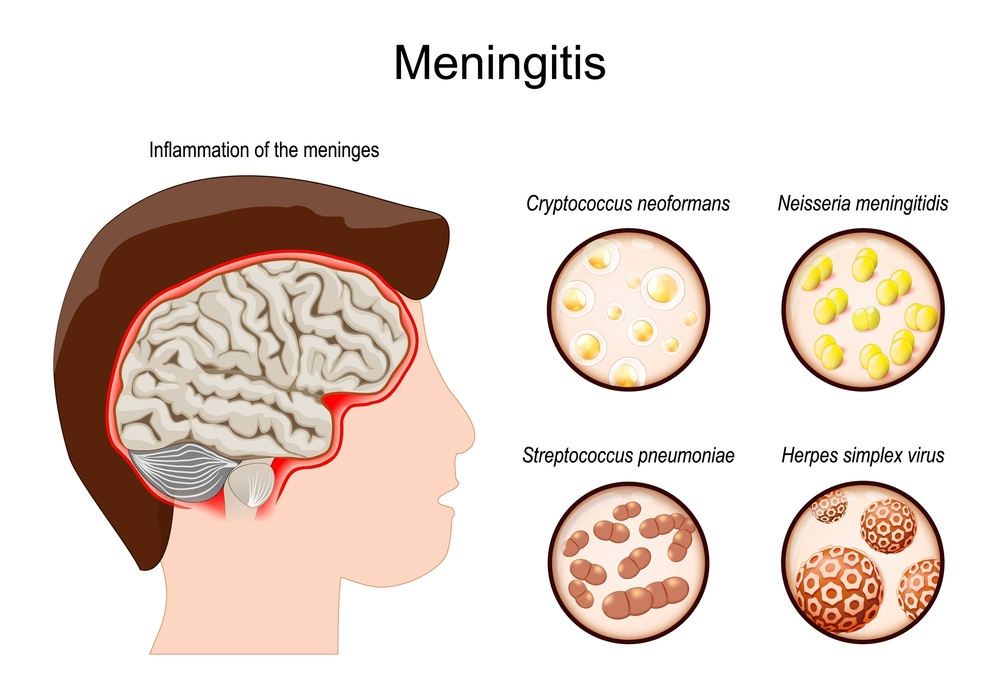
Meningitis can be caused by infections and pathogens such as bacteria, viruses, parasites, and fungi. Infections resulting in meningitis can begin somewhere else in the body, such as the nose, ears, or throat, and can travel to the brain and spinal cord. There are different types of meningitis depending on the cause of the condition. Two of them are as follows:
- Meningitis spread by viruses is the most common, while they are the least serious type of meningitis.
- Meningitis spread by bacteria is a rare condition. However, it is a serious type of meningitis that can be life-threatening if left untreated.
Different bacteria and viruses responsible for meningitis
These are as follows:
Bacterias
- Meningococcal bacteria: Different types of this bacteria are A, B, C, W, X, Y, and Z. All of these types can cause meningitis.
- Pneumococcal bacteria.
- Haemophilus influenzae type b (Hib) bacteria.
- Listeria monocytogenes.
- Escherichia coli.
- Mycobacterium tuberculosis.
- Neisseria meningitidis.
Viruses
- Mumps virus.
- Enteroviruses – Such types of viruses cause mild stomach infections.
- Herpes simplex virus – This virus usually causes genital herpes and cold sores.
- Epstein-Barr virus.
- Varicella-zoster virus.
- Arboviruses, such as West Nile virus.
- Lymphocytic choriomeningitis virus.
Who can get meningitis?
Anyone can get meningitis. However, it is more common among newborns, toddlers, teenagers, and adults. As well as different factors increase the risk of getting meningitis.
Risk factors
Risk factors that increase the chances of getting meningitis are as follows:
- Weak immune system
- Chemotherapy
- Older people
- Patients of HIV
- Pregnancy
- Skipping vaccination
- Living with an infected person
What are the symptoms of meningitis?
Symptoms of meningitis
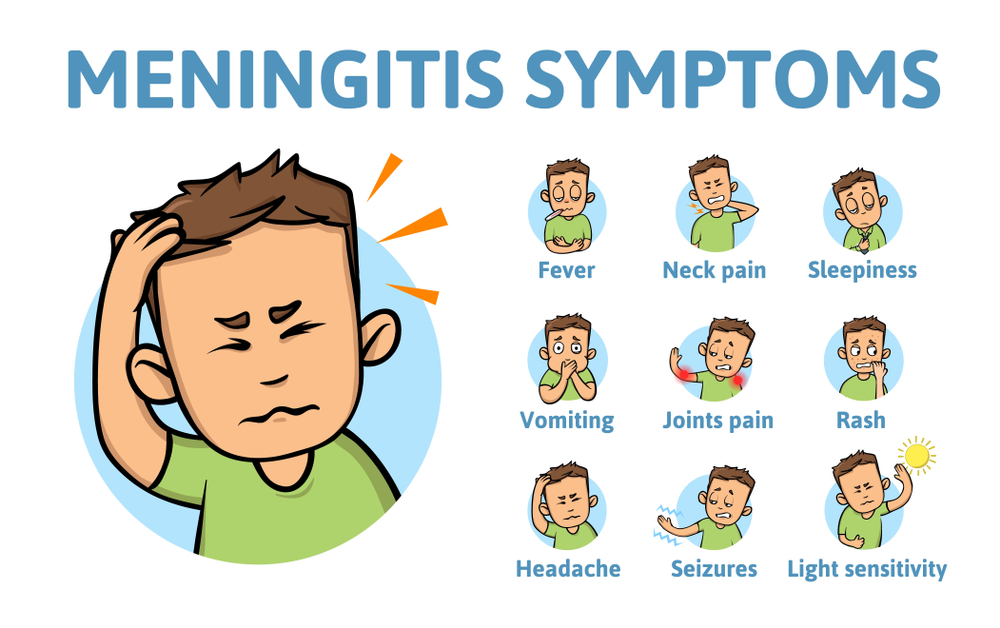
There are various symptoms associated with meningitis. In some cases, the symptoms don’t appear at all. Some common symptoms of sepsis and meningitis are as follows:
- High-grade fever
- Cold hands and feets
- Nausea or Vomiting
- Confusion
- Fast breathing
- Headache
- Neck stiffness
- Dizziness or trouble waking
- Muscle and joint pain
- Pale and blotchy skin
- Presence of a rash (hives) or spots
- Seizures (fits)
- Sensitivity to light
- Loss of appetite and thirst
- Trouble concentrating
Signs and Symptoms in Newborns
- High fever
- Constant crying
- Poor feeding
- Body and neck stiffness
- Bulge on the top of the head
- Being inactive and sluggish
- Nausea or vomiting
- Unresponsive body
How does meningitis spread?
Meningitis is contagious and can spread due to different reasons. These are as follows:
- People in close contact with someone with meningitis are at a higher risk of contracting the infection.
- It can also be spread through contact with objects contaminated with bacteria or viruses.
- Meningitis can be spread through coughing, sneezing, kissing, and sharing eating utensils.
- Contact with saliva, nose and throat secretions, and respiratory droplets can also cause the spread of infection.
- It can also spread through contact with infected animals, such as rodents, bats, and birds.
- Meningitis can also be spread through contaminated food or water or contact with an infected person’s blood.
Complications
Meningitis affects the brain and spinal cord; thus, various complications are associated with this infection. Some of them are as follows:
- Hearing loss
- Seizures
- Stroke or brain damage
- Epilepsy
- Renal failure
- Loss of memory
- Lack of concentration
- Difficulty in learning
- Shock
- Vision loss
- Behavioral problems
- Co-ordination and balance problems
- Loss of limbs due to amputation
- Muscle and joint problems such as arthritis
- Trouble walking
- Death