
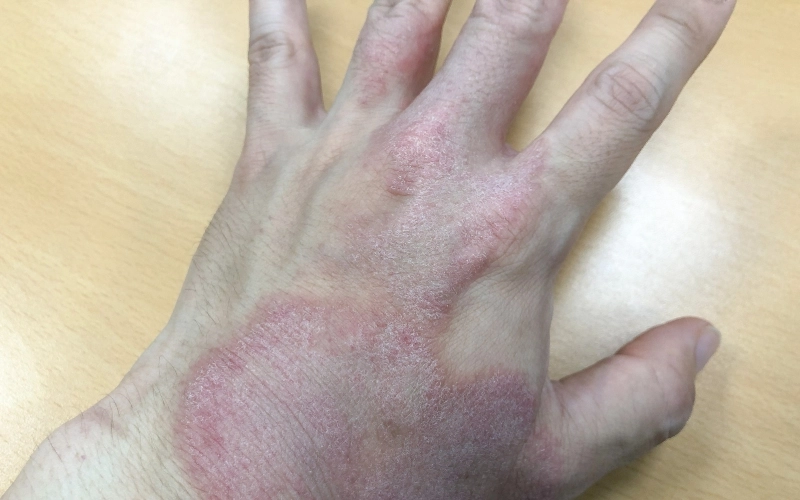
Idiopathic chronic urticaria (IUC) is a rare autoimmune disease that affects between 0.5 and 1% of the population. These are red, itchy, painful bumps or welts raised on the skin. Research shows that the causes of idiopathic chronic urticaria are still unknown, but allergens can trigger it.
Idiopathic Chronic Urticaria: An Overview
Idiopathic chronic urticaria (IUC) is a rare autoimmune disease that affects between 0.5 and 1% of the population. IUC are hives that last longer than five to six weeks. In addition, people with idiopathic chronic urticaria have red bumps, nettle rash, or welts on the skin. The cause of chronic urticaria is unknown. However, patients with autoimmune diseases have a high chance of developing these hives. It often begins as an itchy area of skin that extends into swollen, red welts and can be brought on by various things or circumstances. Food and drugs can be the allergens that cause idiopathic chronic urticaria or hives.

How to identify Idiopathic Chronic Urticaria?
Chronic hives are different from acute hives, which go away within two weeks. Acute or short-term hives can last up to 24 hours, whereas chronic hives can last anywhere from six weeks to years. The symptoms of the disease are the following.
- Red itchy, painful bumps or welts raised on the skin
- Turn into a pale color when pressed
- Angioedema
- Pruritis

Chronic urticarial is sometimes confused with angioedema, which is skin swelling. While the hives are on the surface layer, angioedema is rooted in the internal layers of the skin. The most affected areas are the lips, feet, throat, face, and genitals. In addition, hives can have different shapes and sizes. They may be as small as a pinprick or more prominent than a softball.
What triggers Idiopathic Chronic Urticaria?
Research shows that the causes of idiopathic chronic urticaria are still unknown, but allergens can trigger it. Rarely, food or drug allergies lead to long-lasting hives. However, something you regularly ingest is the most typical allergy reason. According to a recent study, the immune system plays an essential role in the mechanism. There are some common triggers include:
- Food allergy
- Latex allergy
- Alcohol
- Non-steroidal anti-inflammatory drugs (NSAIDs)
- A drastic change in temperature
- Wool clothing
- Exercise
- Prognosis
When does it end?
The prevalence of the disease is 5%, of which 20% have had the chronic urticarial disease once in their lifetime. It is most common in women aged 30 to 50. However, there is no cure for the disease. Medicine and healthy lifestyle help to get relief from the symptoms. The prognosis of the disease is between 1 and 5 years; in some, it can last longer, up to 10 years.
Idiopathic Chronic Urticaria association with other diseases
Studies have found a 25% link between idiopathic chronic urticaria and asthma, while 15% for allergic rhinitis and atopic dermatitis. it is also associated with infection caused by sinus infections (sinusitis) and H. pylori bacterial infections. In addition, some autoimmune diseases have a high chance of IUC in about 1 in 5 people, such as diabetes, vitiligo, lupus, celiac disease, polymyositis, thyroid disease, lymphoma, vasculitis, and rheumatoid arthritis.
How to diagnose and evaluate Idiopathic Chronic Urticaria?
Allergists and dermatologists have diagnosed idiopathic chronic urticaria and treated it by examining the symptoms of the disease. The physical examination includes a medical history, a possible allergen from food or surroundings, the severity of the swelling, or other disease symptoms like enlargement of the thyroid.
Physicians use diagnostic tests to identify the symptoms for treating them. These tests include the following:
- An allergy test is used to identify the causative allergen.
- Skin prick test is also for allergens by scratching the skin for skin reaction.
- A serum or blood test recognizes the interactive proteins and antibodies against the foreign substance.
- A urine test is used for the identification of any bacterial infection that causes chronic hives.
- A biopsy procedure on the skin is helpful in the confirmation of the diagnosis of the disease.
- Experts try to find the cause of the allergy, but when no reason is found, there are high chances of being diagnosed as Chronic Spontaneous Urticaria.
Prevention and treatment of Idiopathic Chronic Urticaria
As the disease is characterized as a hypersensitive autoimmune disease initiated due to a specific allergic reaction, some treatment is available for chronic idiopathic chronic urticaria.
- Antihistamines are the antiallergic medication used to relieve itching and allergic reaction.
- A monthly dose of injection approved by the FDA is available, like “omalizumab” with the brand name XOLAIR® which blocks the production of allergic antibodies (IgE) in the body.
- Prednisone is a corticosteroid that helps to relieve the severity of hives.
- An antimalarial drug, Hydroxychloroquine, has an influential role in symptom relief for chronic hives.
- A drug from fungi, Cyclosporine, is used to treat chronic hives for a limited time.
- In the case of low drug potency, high doses are recommended to overcome the symptoms, including leukotriene antagonists and NSAIDs.
- Every case of urticaria is different and must be discussed with allergists or dermatologist experts to get appropriate treatment.
Home remedies for relieving Idiopathic Chronic Urticaria
There are some natural ways to cope with this disease. These remedies are used to reduce inflammation and soothe idiopathic chronic hives. However, as the causes of ICU are unknown, some triggers induce these allergic reactions.
- These hives can be managed by having a balanced life, including exercise, a healthy diet, supplements, and avoiding allergic foods.
- You can apply OTC anti-itch cream.
- Cool compresses can be soothing for hives.
- Avoid hot showers or baths.
- Moistures with minimal allergic chemicals are not used on the skin.
- Avoid tight and wool clothing.
- Avoid stress and anxiety.
When to consult a physician?
You should consult your physician when an infection is seen in the form of swollen red bumps filled with pus, or severe itchy skin reoccurs after every month.