

Vitiligo on pale skin is a chronic skin condition characterized by the loss or lack of melanin pigment in patches of skin, resulting in a pale or white appearance. The affected area of the skin that loses pigment is known as macules or patches.
Macules: If the pigment size is less than 1 cm, it is called “macules.”
Patches: If the pigment size is larger than 1 cm, it is called “patches.”
Vitiligo affects 1-2% of the world’s population.
Facts about vitiligo
- Vitiligo is an autoimmune disease of the skin.
- It causes the skin to lose color or pigmentation.
- Vitiligo on pale skin can be more noticeable than on darker skin tones.
- The most common age of onset for vitiligo is between 10 and 30 years old.
- It can cause skin discoloration in up to 20 cm in diameter patches.
- This skin condition can affect any area on the body; however, the most affected are the face, neck, hands, and arms.
Types of Vitiligo on pale skin
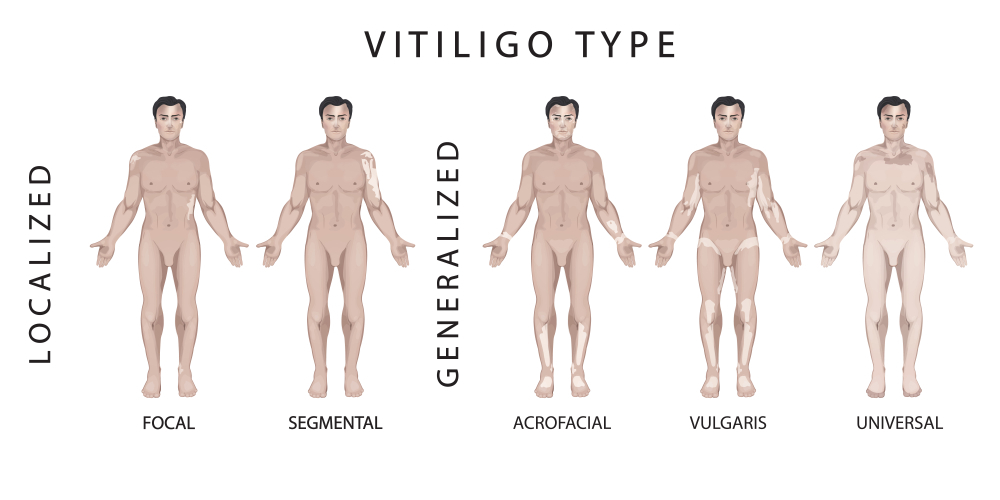
Types of Vitiligo on pale skin
There are different types of vitiligo. Some of them are as follows:
- Generalized vitiligo
- Focal vitiligo
- Segmental vitiligo
- Non-segmental vitiligo
- Mucosal vitiligo
- Trichome vitiligo
- Universal vitiligo
- Acrofacial vitiligo
Generalized Vitiligo
This is the most common type of vitiligo in which macules appears all over the body and sometimes at different places on the body.
Focal Vitiligo
It is a rare type of vitiligo in which the macules appears in a small area and don’t spread to different areas until two or more years of appearance.
Segmental Vitiligo
In this type of vitiligo, one side of the body is generally affected, such as the hands and face. Therefore, this type is also known as “Unilateral vitiligo” and “Localized vitiligo.” It primarily affects children and is less common than non-segmental.
Non-segmental Vitiligo
Non-segmental vitiligo affects both sides of the body symmetrically. Therefore, it is also known as “Bilateral vitiligo.” It is one of the most common types of vitiligo that affects 9 out of 10 people.
Mucosal Vitiligo
Mucosal vitiligo is the type of vitiligo on pale skin that affects the mucosal membrane of the mouth and genitals. This type is also known as “lip-tip vitiligo.”
Trichome Vitiligo
This type of vitiligo causes a bullseye effect which means a white or colorless center, an area of lighter pigmentation, and then an area of natural pigmentation.
Universal Vitiligo
It is a rare type of vitiligo, but 80% of the body has lost the pigment in this type, and the vitiligo spreads over the body.
Acrofacial Vitiligo
The type of vitiligo that affects the face, hands, and feet is known as acrofacial vitiligo.
Vitiligo is more common in women than men, with a ratio of 3:2.
What are the causes of vitiligo?
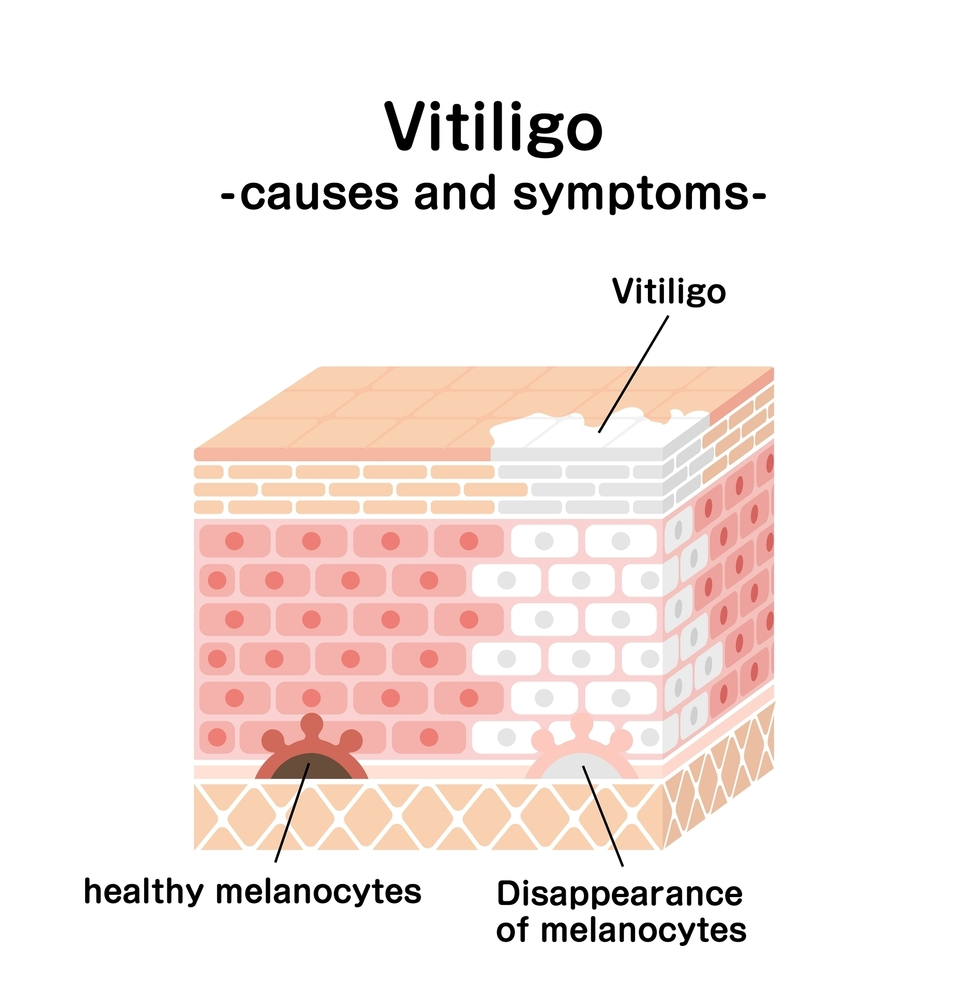
Causes and symptoms of vitiligo on pale skin
The lack or deficiency of the melanin pigment in the skin causes vitiligo. Melanin is the pigment produced by skin cells known as melanocytes. This pigment is responsible for giving color to the skin.
If the skin cells’ “melanocytes” doesn’t work properly due to any reason, it can cause vitiligo. The actual reason behind this is still known. However, scientists believe that different factors can affect the production and working of melanocytes. These are as follows:
- Autoimmune conditions
- Genetics
- Family history
- Environmental factors
- Alopecia
- Stress
- Thyroid diseases
- Diabetes
- Skin trauma or sunburn
What are the symptoms of vitiligo on pale skin?
There are several signs and symptoms associated with vitiligo. The most common symptom is loss of natural color, the condition also known as “depigmentation.”
Other symptoms
Additional symptoms of vitiligo are as follows:
- The appearance of macules or patches on the skin.
- Silver, gray, or white patches of hair on the skin.
- Itchy skin before the start of pigmentation.
- Loss of color in the lining tissues of the mouth and nose.
- Uveitis.
- Inflammation in the ear.
- Prone to sunburn.
- The color of eyelashes, eyebrows, or scalp hair turns white.
- Hair loss.
- Change of eye color.
How can vitiligo affect the quality of life?
Vitiligo can affect the quality of life by affecting the various components of a person’s life. It gives some people different emotions and feelings. These are as follows:
- Anxious
- Depressed
- Frustrated
- Self-conscious
- Angry
- Embarrassed
- Low self-esteem
Where does vitiligo appear on the body?
Vitiligo is a skin disease that can affect every part of the body. However, it depends on the type of person suffering from a specific type. This will distinguish the part of the body affected by vitiligo.
Furthermore, the most affected part of the body is the face, hands, neck, and feet.
Who is most likely to develop vitiligo on pale skin?
It depends on several variables, some of which are as follows:
- Family history.
- Race.
- Age.
Generally, lighter skin tones are more likely to have vitiligo, and those with a family history of the condition are considered more prone to get it.
Vitiligo can affect persons of any age, but those between 10 and 30 are more prone to get it.
Risk Factors and Complications of Vitiligo on pale skin
Risk factor of vitiligo on pale skin
Different factors increase the risk of getting vitiligo. Some of them are as follows:
- Family history of vitiligo
- Family history of autoimmune diseases
- Medical history of autoimmune condition
- History of melanoma (cancer) or non-Hodgkin disease
- Alteration in genes
Complications of vitiligo on pale skin
Various complications are associated with vitiligo. Some of them are as follows:
- Eye-related problems such as change of color or inflammation of the eye.
- Skin becomes more sensitive.
- Stress.
- Emotional challenges.
- Increased risk of getting other autoimmune conditions.
- Depression.