
Unraveling the mystery of skin, our largest organ, is like entering a labyrinth. Among many disorders that hide within this maze, Vitiligo signs is an enigma with its seemingly random patches of white appearing as an uninvited guest on the canvas of your skin. You wake up one day to find unfamiliar spots on your body – a dermal mirage that becomes a reality over time. This can be heart-wrenching – you’re gradually losing your normal skin tone to blotches of white, like a human Dalmatian in the making! However, armed with knowledge about Vitiligo’s signs and symptoms, you can effectively beat the stress of this unpredictable disguise. Welcome to a journey through the speckled world of Vitiligo. Let’s explore what to look for to decode its early onset and possible treatments.
The most common symptom of Vitiligo is loss of skin color, resulting in white patches. Other signs can include premature whitening or graying of hair, loss of color in tissues lining the inside of the mouth or nose, and discoloration of the retina. Some individuals with Vitiligo may also experience itching, dryness, or pain in affected areas. If you believe you may have Vitiligo, please consult a medical professional for proper diagnosis and treatment options.
Identifying Signs of Vitiligo

Vitiligo is an autoimmune skin disorder that affects the skin’s pigmentation and causes white patches. While Vitiligo can affect people of all races, these patches stand out more in people with darker skin. The condition affects about one percent of the world’s population, but it remains relatively unknown despite its high prevalence.
If you’re worried that you may have Vitiligo or want to know what symptoms to look for, there are a few key signs indicating the condition. The most obvious sign of Vitiligo is the presence of patchy loss of skin color in any part of your body, including your hair and the insides of your mouth.
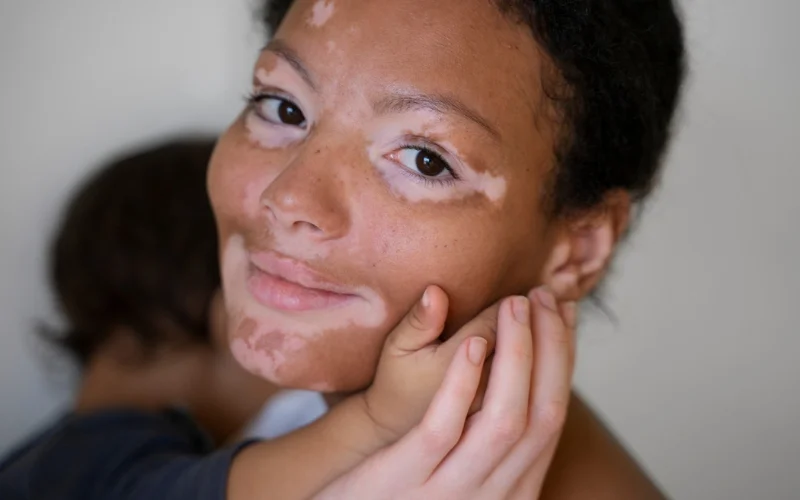
You may notice small white spots on your skin that gradually increase in size over time. These spots often appear symmetrically and occur on both sides of the body. In some cases, these patches merge, resulting in large white areas. At times, vitiligo patches may appear tan or pink in lighter-skinned people, while dark-skinned individuals will experience a loss of more melanin pigment and develop depigmented white patches.
Other signs to look out for include premature graying or whitening of hair on your scalp or eyebrows. Typically occurs before scattered white spots start becoming noticeable, especially for younger individuals who develop Vitiligo.
Additionally, if you experience itchiness, pain, or discomfort within those patches, it could indicate inflammation – which merits further review by a medical professional. However, not everyone with Vitiligo experiences these sensations.
Identifying early signs is crucial to managing the progression of Vitiligo and maintaining your skin’s overall health. Now let’s explore more about how Vitiligo presents itself through variations in skin color patches.
Variation in Skin Color Patches
Vitiligo affects people of all ages and races. The commonly recognized symptom is patchy skin depigmentation. However, Vitiligo can occur differently for different individuals, with the extent and location of patches varying significantly. It can impact any part of your body, with melanocytes producing melanin.
Patches of skin whitening are often irregular and range from very small to very large. They appear most commonly on sun-exposed areas such as the face, hands, and feet but can develop anywhere on your body at any age. In severe cases, Vitiligo can spread to most parts of the body, which leads to the loss of melanocytes within hair growth, making them white or making patches inside the mouth lose color.
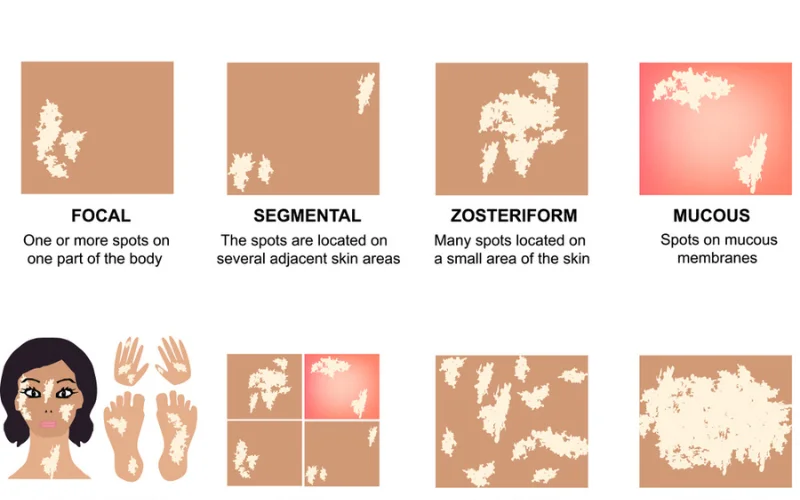
Different types of Vitiligo vary based on the size or area affected by depigmentation. Segmental Vitiligo involves a depigmenting place on only one side or part of the body, while Non-segmental Vitiligo appears symmetrically on both sides. Additionally, focal Vitiligo includes one or more small scattered spots.
Imagine a puzzle with pieces unevenly missing and filled in with white instead of its original color- this is how Vitiligo can sometimes appear when affecting multiple areas across an individual’s skin.
Understanding the various forms of Vitiligo is vital in effectively diagnosing and treating the condition. Next, we will explore some possible symptoms of Vitiligo, including physical and psychological effects.
Premature Hair Whitening
Vitiligo is a skin disorder that causes the loss of pigmentation in different parts of the body, including the hair. The condition can lead to the hair turning white prematurely. This can happen to adults and children, but it’s more common among individuals with darker skin tones.
One anecdotal piece of evidence is the case of a 32-year-old Hispanic woman who noticed white hair on her eyebrows and eyelashes. She was diagnosed with Vitiligo after visiting a dermatologist and undergoing several tests. Several months after getting the diagnosis, she began to see white patches on her hands and feet.
This is just one example of how hair whitening can be an early sign of Vitiligo.
The exact cause of this phenomenon is unknown, but scientists believe it’s related to the loss of melanocytes in the affected area. Melanocytes are responsible for producing melanin, which gives color to skin and hair. When they become damaged or destroyed, there’s no longer enough melanin production leading to hair whitening.
An analogy for this process would be likening melanocytes to a factory that produces paint. If some portions of the factory ceased production, walls and other objects around will go unpainted because there’s no more paint being manufactured.
It’s important to note that not all cases of premature hair whitening result from Vitiligo – other factors such as heredity or vitamin deficiencies may also contribute to this phenomenon.
- Vitiligo is a skin disorder that can cause hair whitening as an early sign. The loss of melanocytes in the affected area decreases melanin production, resulting in hair whitening. While premature hair whitening can be a sign of Vitiligo, it’s not always the case, and other factors like heredity or vitamin deficiencies may also contribute to this phenomenon.
Symptoms Associated with Vitiligo
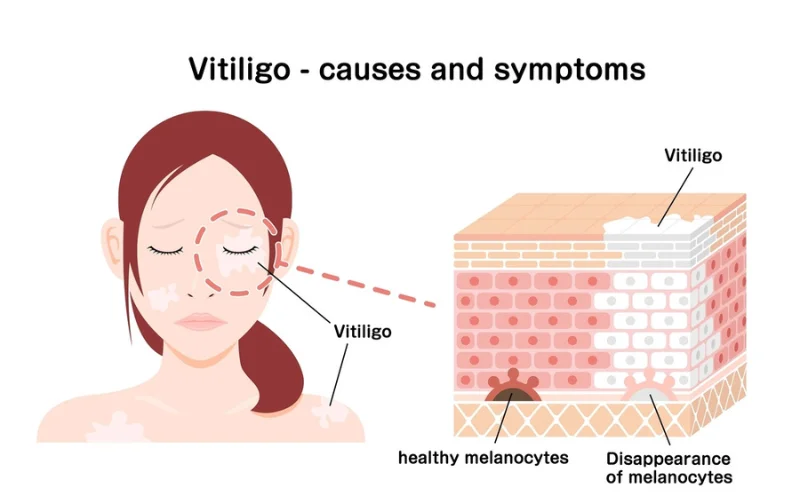
Apart from depigmented skin and white hair patches, individuals with Vitiligo may experience other symptoms associated with the condition. These additional signs include itching or dry skin in affected areas.
For instance, one individual with Vitiligo talked about feeling like a lizard every time she experienced dry patches on her skin. She explained that no amount of lotion or cream could ever quench the thirst of her scaly skin.
It’s important to note that while Vitiligo poses no physical harm or pain, the condition can affect an individual’s emotional and psychological well-being as they deal with its impact on appearance.
Another symptom associated with Vitiligo includes a higher risk for other autoimmune diseases such as thyroid problems, lupus, and alopecia areata; At the same time, some studies suggest a correlation between these conditions; others argue that further research is necessary to prove causation.
[VARIATIONS] Additionally, the extent of depigmented skin patches in individuals can vary greatly; some may only have small or localized areas, whereas others may have larger sizes throughout their bodies. This variability makes predicting how an individual’s case will progress difficult.
One possible side effect of Vitiligo is that individuals may develop sunburns more easily in affected areas due to decreased melanin protection.
Overall, understanding the different symptoms associated with Vitiligo is crucial in identifying the condition and seeking treatment options to manage and alleviate its effects.
.
Impact on Mucous Membranes
Vitiligo is a skin disorder that can affect any body part, including the mucous membranes. The mucous membranes line the inside of the mouth and nose, as well as other openings in the body. When Vitiligo affects these areas, it can cause significant discomfort, pain, and embarrassment for individuals living with the condition.
Itching or burning sensations are often reported by individuals who have developed Vitiligo on their mucous membranes. These symptoms can be especially distressing because they interfere with basic functions like breathing, swallowing, and speaking.
Moreover, the loss of pigmentation on the mucous membranes can lead to more severe health problems such as infections or other complications. This is because a reduction in melanocytes makes the mucous membranes vulnerable to harmful bacteria and viruses that can easily pass through them.
To help understand this better, let’s consider how sunburns make our skin vulnerable to external conditions. Similar to how sunburned skin becomes more sensitive while losing its protective shield, so do the affected parts of your body due to Vitiligo.
Now that we have discussed how Vitiligo affects the mucous membranes physically let’s look at its psychological impacts.
Psychological Effect of Vitiligo
While Vitiligo is commonly characterized by a loss of melanocytes in particular body areas, the exact cause of this phenomenon is still under investigation. Research points towards a connection between genetics and environmental factors predisposing individuals to the disorder.
Stay tuned for our next section, where we will explain in depth what we know about possible causes of Vitiligo and how we can find new ways to prevent or cure it.
- According to the American Academy of Dermatology (AAD), Vitiligo often first appears as a single, small, white patch on the skin before it spreads. It is seen in nearly 30% of the cases.
- A study in the Journal of Dermatology reported that up to 70% of individuals with Vitiligo have a family history of the disorder, and nearly 15% of these individuals can identify a specific triggering event, such as sunburn or emotional distress.
- The World Health Organization reports that approximately 0.5 to 2 percent of the world’s population has Vitiligo, with most individuals developing symptoms before their 40th birthday, particularly those residing in India and Mexico, where rates are as high as 8.8%.
Unraveling the Causes of Vitiligo

Living with Vitiligo can lead to emotional distress for many individuals. It is a chronic condition that affects a person’s physical appearance, causing widespread stigma and social isolation. People with Vitiligo must constantly confront society’s unrealistic beauty standards, which make them feel ashamed or embarrassed about their appearance.
The emotional impact of Vitiligo can manifest itself in different ways depending on the individual, but feelings of anxiety, depression, or low self-esteem typically mark it. Additionally, people with Vitiligo often experience social exclusion and discrimination, leading to feelings of loneliness or isolation.
Moreover, Vitiligo can also significantly affect a person’s quality of life. Studies have shown that individuals with Vitiligo may have trouble finding employment due to the stigma associated with their condition. Additionally, they may avoid going out in public or participating in social activities, further reducing their quality of life and perpetuating the cycle of isolation.
While some people may find strength in their unique appearance and feel empowered, others struggle with acceptance and self-confidence. It is important to acknowledge both perspectives while emphasizing the importance of developing positive coping mechanisms, such as therapy or support groups.
Available Treatment Options for Vitiligo
The exact cause of Vitiligo remains unknown, but a growing body of research suggests several factors play a role in its onset. One popular theory is that Vitiligo is an autoimmune disorder when the body’s immune system attacks healthy cells, such as melanocytes, responsible for skin pigmentation. Melanocytes produce melanin or skin pigment, which gives color to the skin. Without these cells, the affected areas become white.
Another theory is that inheritance plays a part in the development of Vitiligo. Studies have found genetic links responsible for increased susceptibility to autoimmune diseases affecting melanocytes, such as type 1 diabetes and rheumatoid arthritis. Individuals with a family history of Vitiligo may be more likely to develop the condition.
While Vitiligo can occur at any age, it typically presents before age thirty. Certain triggers may cause the onset of vitiligo symptoms for some individuals. For example, sunburns, emotional stressors like anxiety and depression, exposure to certain herbicides, and other environmental toxins have been suggested as possible triggers.
Some individuals with clinical procedures like aggressive laser treatment might also develop Vitiligo. In such cases, doctors believe that injury caused by overexposure during treatment may cause an autoimmune response leading to localized Vitiligo.
Recent research has also shown that specific biochemical pathways in Vitiligo patients differ from those without the condition. These disparities contribute to an altered immune response against melanocytes.
Despite these advances in understanding how certain biological and environmental factors could trigger vitiligo symptoms, researchers are still trying to identify why immune cells attack healthy skin cells resulting in abnormal depigmentation patterns.
Having understood some possible causes of Vitiligo, let us examine available treatment options for managing this condition.
Related Article: Vitiligo on Pale Skin: What You Need to Know?